
Elementary School · Grades 1–6
Elementary: understand and apply
Elementary school begins the formal process of building a foundation for a lifetime of learning, with a program that combines subjects, activities and classroom experiences.
From students to learners
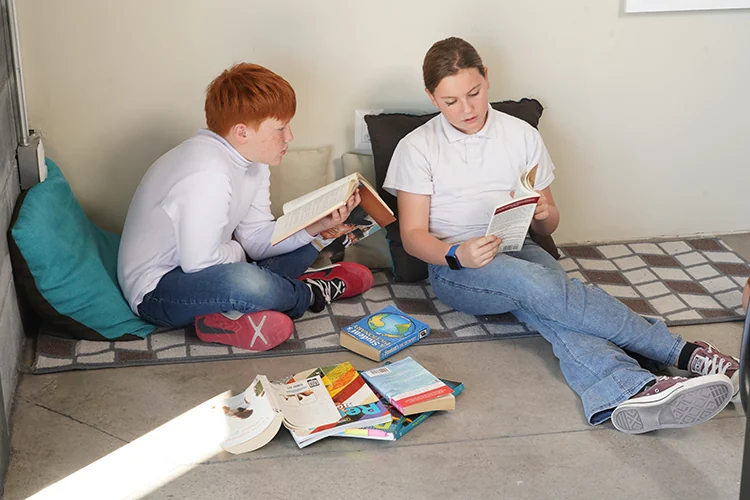
Our classes help students understand the process behind what they learn and put that learning into practice, rather than simply memorize facts.
Our approach
Understanding together
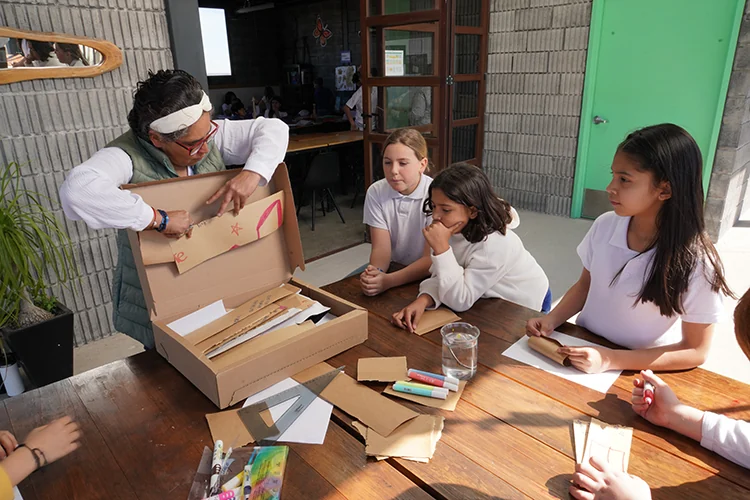
We learn by investigating in teams, talking things through and testing ideas. Teachers set challenges, guide students and adjust their support so each student can work with growing independence.
Atelier
The Atelier continues in Grades 1 and 2
In Grades 1 and 2, students keep exploring hands-on in the Atelier, the space for inquiry they first came to know in preschool.
How we learn
Four ways to learn by doing
Learning by doing is part of the Academia experience.
Game-based platforms
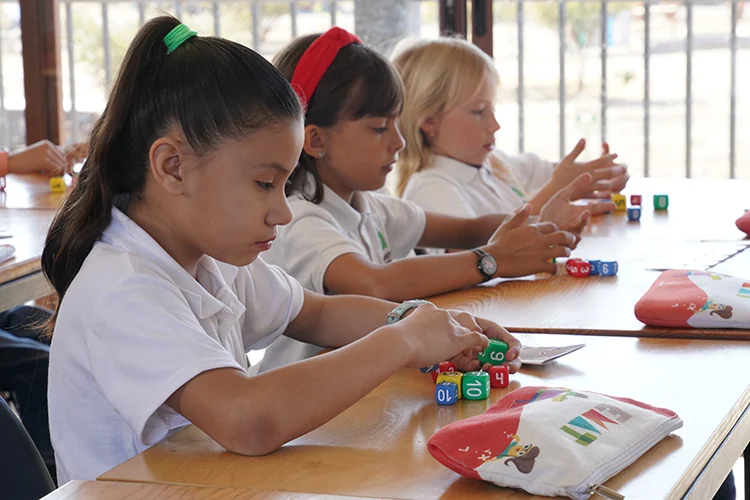
Math through play.
STEAM and Maker culture
Science, art and technology in a single project.
Learning centers
A path for every way of learning.
Project-based learning
Challenges that end in solutions.
STEAM and Maker culture
Learning by doing
Elementary school introduces STEAM, which brings together science, technology, engineering, art and math, along with Maker culture.
Designing, building and testing help students understand how things work and put what they learn in class into practice.
Learning centers
Different paths to the same goal
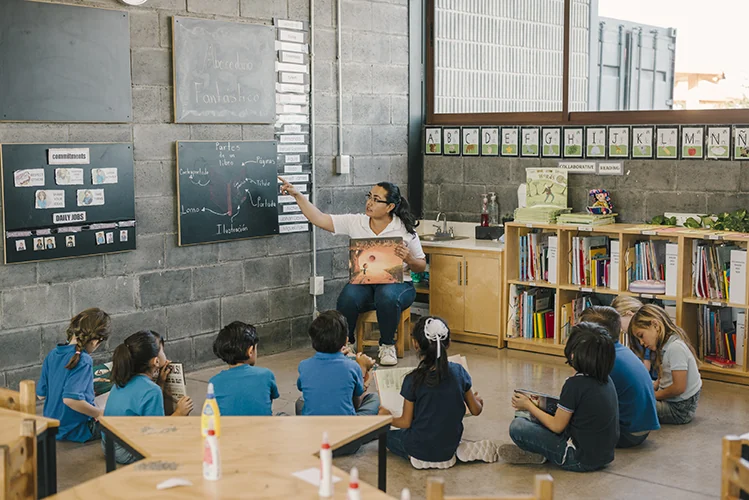
Learning centers are key elements of differentiated instruction, which seeks to respond to the way each student learns.
Working in different spaces and activities lets us address different ways of learning within the same group.
STEAM
Five letters, one way to learn
STEAM brings science, technology, engineering, art and math together to approach challenges from different perspectives.
-
Science
Observing, asking questions and testing ideas through experiments.
-
Technology
Using digital tools to research, create and solve problems.
-
Engineering
Designing, building and improving solutions to a challenge.
-
Art
Giving shape to ideas through creativity, color and design.
-
Math
Measuring, counting and reasoning to understand what they build.




Project-based learning
From a question to a solution
Ask
A challenge or a question opens the project and involves the whole group.
Investigate
They look for information, test ideas and compare results.
Build
They design and develop a proposal as a team.
Present
They share what they made and what they learned along the way.
Positive change makers
The Sustainable Development Goals in class
The Sustainable Development Goals (SDGs) are a UN call to action to end poverty, protect the planet and improve lives for everyone. Our students, as positive change makers, act on these goals.
We use resources and projects from the World’s Largest Lesson, and we are in partnership with My World Kids to advocate for Education for Sustainable Development.
Social and emotional development
Knowing themselves, getting along with others
Our programs take social and emotional development into account so that students grow into well-rounded people.
Self-awareness and self-regulation
They recognize what they feel and learn to manage it.
Understanding others
They understand other people’s perspectives and recognize who they are.
Making choices with confidence
They learn to make choices with confidence in situations involving themselves and others.
Materials and platforms
Practice through play
Key subjects such as math are supported by game-based platforms to make learning fun and interesting.
Our elementary textbooks are from Ediciones SM.
English
English in every grade
English is part of every grade. Our program uses the Cambridge English levels (Common European Framework of Reference) as its benchmark, and we certify English proficiency from second grade on, through Trinity College London or Cambridge ESOL.
Frequently asked questions
What families ask us
Which grades does elementary school include?
Elementary school covers Grades 1–6.
What is English like in elementary school?
English is part of every grade. Our program uses the Cambridge English levels (Common European Framework of Reference) as its benchmark, and English certification starts in second grade.
What are STEAM and Maker culture?
STEAM brings together science, technology, engineering, art and math, and Maker culture invites students to design, build and test. Together, they help students put what they learn in class into practice.
Which textbooks do you use?
Our elementary textbooks are from Ediciones SM.
Is there an Atelier in elementary school?
Yes, in Grades 1 and 2, continuing the preschool Atelier.
Is the elementary school officially recognized by the education authorities?
Yes. Our elementary school has official recognition from SEG (Guanajuato’s Secretariat of Education), under code 11PPR1063Z.
How can I arrange a visit?
Request a visit. An admissions advisor will contact you to confirm the date and time of your visit. You can also email contacto@academiasanmiguel.org, call +52 415 152 3235 or message us on WhatsApp at +52 415 113 7605. We are at Camino a Alcocer 8A, Col. Saltito de Guadalupe, 37745 San Miguel de Allende, Gto., Mexico. Our hours are Monday to Friday, 8:00 a.m. to 3:00 p.m.
Visit us
Visit our elementary school
Come see our learning spaces and talk with us about what matters to your family.